
Bringing together employer and educational cooperation perspectives to help Chinese students plan their international growth pathways
From October 24 to 25, 2026, the Russell Group 15-University Joint Open Day was held successively in Shanghai and Beijing. Established in 1994, the Russell Group is composed of 24 leading research-intensive universities in the United Kingdom and is often referred to as the UK's "Ivy League," representing the country's highest standards in teaching and research. The open day brought together several Russell Group member universities, including the University of Liverpool, the University of Warwick, Durham University, the University of Glasgow, and the University of Birmingham. Centered on three thematic zones—AI, the digital age, and green development—the event provided Chinese students and parents with face-to-face information on university admissions and career development through university booths, academic lectures, alumni sharing, and employer exchanges.
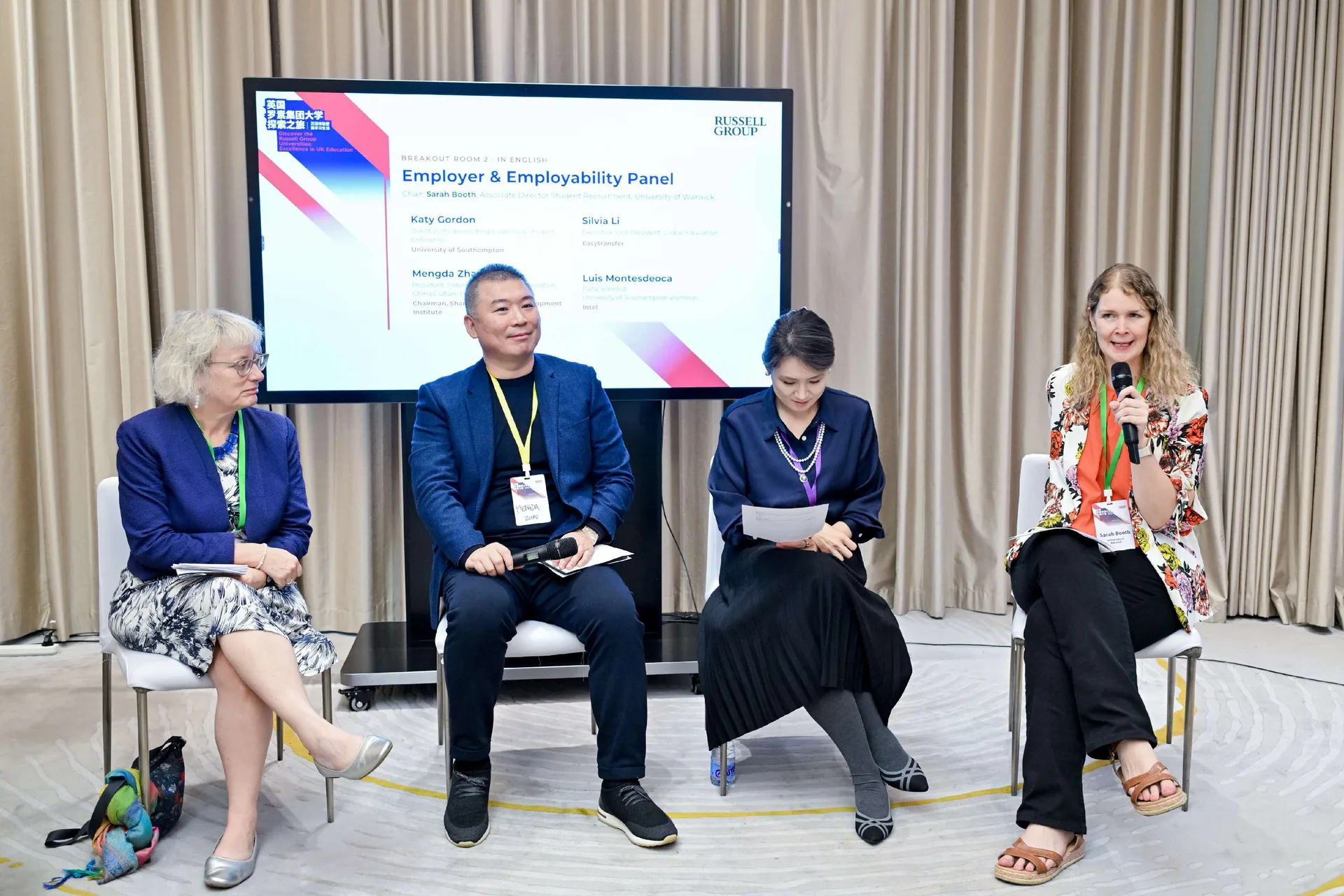
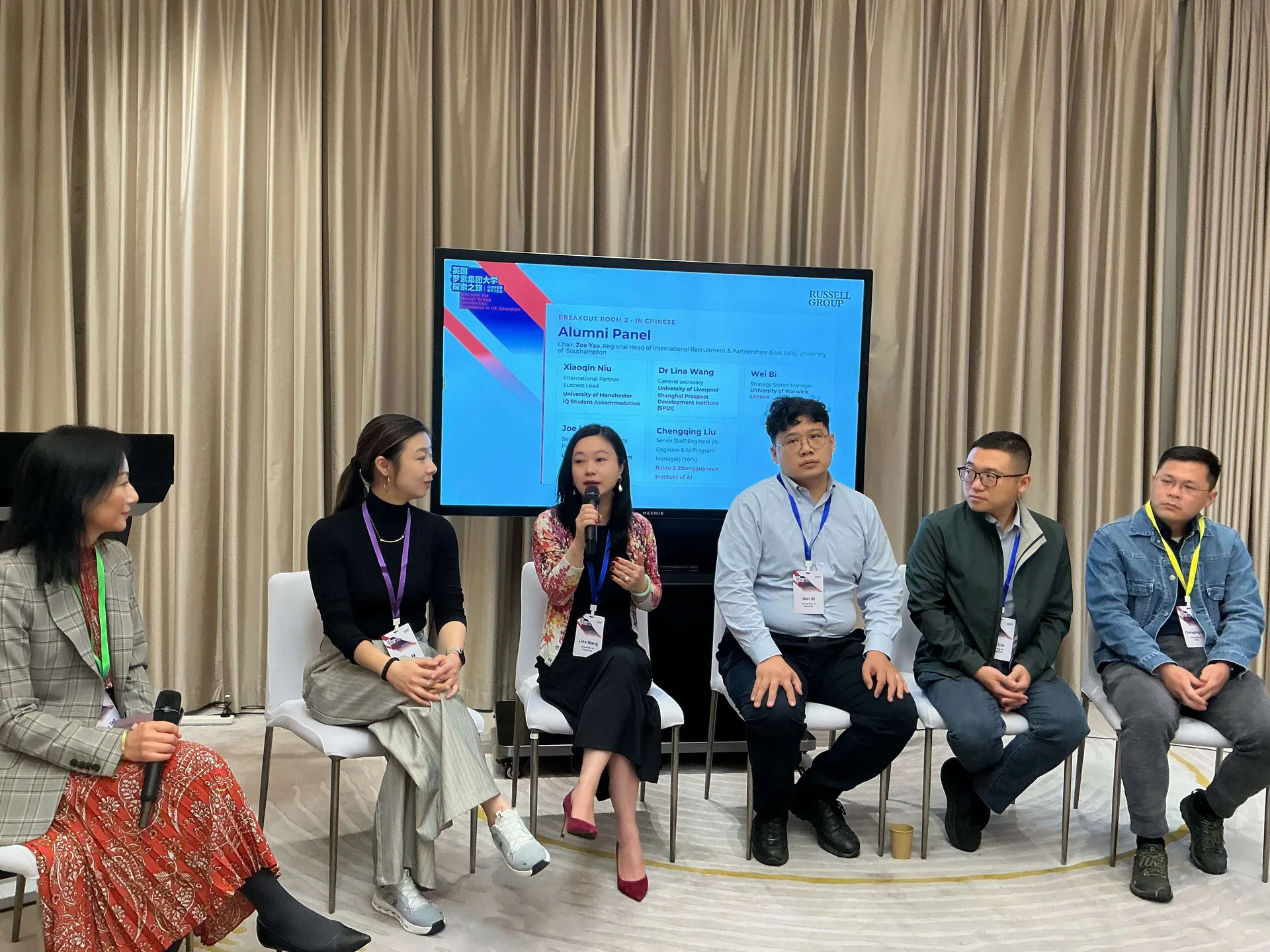
Zhao Mengda, Executive Chairman of Shanghai Prospect Development Institute (hereinafter referred to as "SPDI"), Chairman of the China Culture Promotion Association Industrial Investment Association (CCPAIIA), and CEO of Longcharm Group, and Dr. Wang Lina, Vice Chairman and Executive Dean of SPDI and Co-founder of Longcharm Education, were invited to attend the event. Zhao Mengda participated in the panel discussion as an employer representative, sharing observations on international talent development, future skills needs, and China-UK educational cooperation from the dual perspectives of an employer and an educational partner. In a separate panel discussion, Dr. Wang Lina held in-depth discussions with attendees on domestic and international educational pathways, international education planning, and learner growth pathways.
Talent Through the Employer Lens: Judgment, Curiosity, and Responsibility
During the employer panel session, Zhao Mengda introduced SPDI's development history and internationalization direction. Founded in Shanghai's Pudong New Area in 2003 and originating from the "Prospect Plan" launched in 1993, SPDI has for more than three decades been deeply engaged in talent development, professional training, regional cooperation, and international exchange, with cumulative training of more than 55,000 participants. The institute is now extending this experience into international continuing education, executive training, youth development, and institutional cooperation.
Discussing changes in industry talent needs, Zhao Mengda noted that AI is transforming almost every industry, while international cooperation and sustainable development are also reshaping the external environment in which organizations operate. Employers increasingly need people who can connect technology with real-world problems. "The advantage in the future will belong to those who can learn quickly, communicate across disciplines, and remain useful even when instructions are not entirely clear."
When asked which capabilities are hardest for AI to replace, he identified judgment, trust, empathy, leadership, negotiation, and accountability as core. "AI can produce an answer very quickly, but it is not particularly good at judging which answer is worth adopting, who it will affect, and whether it is wise."
Regarding the qualities of graduates from Russell Group universities, Zhao Mengda drew on his experience working with colleagues and partners who graduated from institutions such as the University of Liverpool and Durham University. He noted that colleagues with Liverpool backgrounds often bring pragmatic, internationally minded approaches to projects, while partners with Durham backgrounds are known for analytical rigor and prudent advice. "They ask very good questions—occasionally inconvenient, but usually extremely useful. The strongest graduates tend to combine academic ability with humility and practical judgment."
On how Chinese international students can prepare for employment back in China, Zhao Mengda advised students to maintain ongoing attention to the Chinese market, understand domestic industries, the digital environment, business culture, and the regulatory landscape, and stay connected with domestic companies, alumni, and professional networks. "Studying at a respected university is very helpful; knowing how to apply that education within real Chinese organizations is far more helpful."
He cited Dr. Wang Lina as an example of how an international educational background can translate into practical value. Dr. Wang Lina holds a PhD from the University of Liverpool and a master's degree from the University of Cambridge. At SPDI, she connects her international education experience with continuing education, international university cooperation, student development, and professional training. "She understands both what British universities expect and what Chinese students, professionals, and institutions need. Being smart is good; being reliable and smart in a way that builds bridges is better."
Educational Cooperation Through the Pathways Lens: From "Choosing a University" to "Building Capabilities"
In another discussion, Dr. Wang Lina exchanged views with attendees on domestic and international educational pathways and international growth pathways. She noted that when planning international education, students and parents should first answer "what capabilities do I want to build," and then compare how curricula, teaching methods, academic environments, and future plans align. Rankings are certainly a useful reference, but students should pay more attention to the people they will meet, the projects they can participate in, and the kind of person they hope to become.
Regarding career preparation during their studies, Dr. Wang Lina advised students to build a personal skills map, complete internships, participate in projects with tangible outputs, attend employer events, engage with alumni, and build a portfolio, while also learning to use AI responsibly and continuously developing writing, communication, and problem-solving skills. "Employers remember people who have actually solved problems, not those who merely describe problems beautifully."
Building Bridges for China-UK Educational Exchange and Serving International Talent Development
SPDI's participation in the Russell Group Joint Open Day is another practical step in its efforts to expand international educational cooperation and connect high-quality educational resources between China and the UK. During the event, SPDI representatives exchanged views with admissions representatives, academics, and alumni from several Russell Group universities on international education project cooperation, student development support, and the alignment of employer needs.
SPDI stated that it will continue to leverage its strengths in educational project organization, international cooperation, and professional talent development, and, in light of the actual needs of Chinese students and international education trends, explore diversified, professional, and international talent development models, creating more practical international learning and career development pathways for Chinese students.