
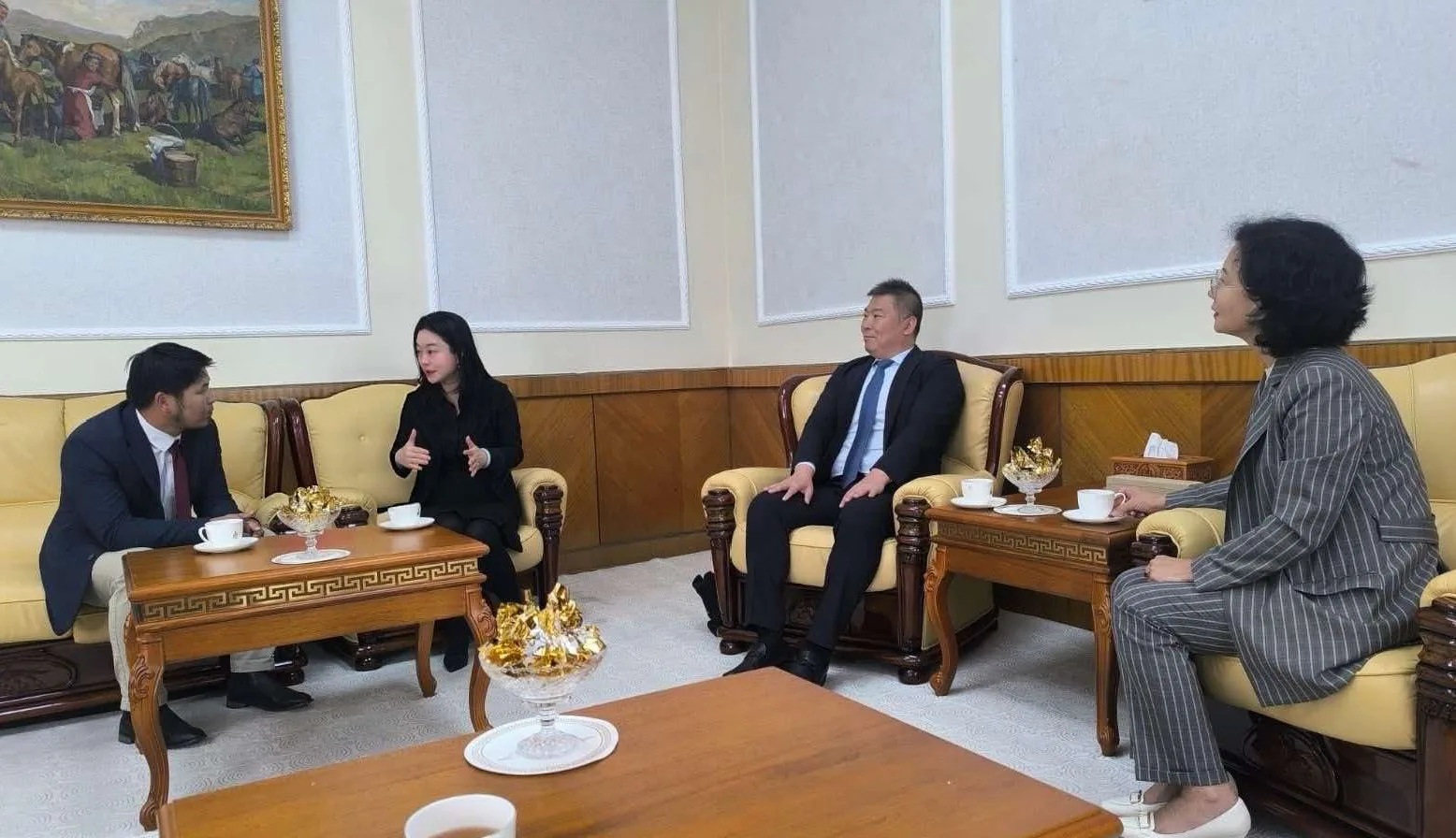
Recently, Zhao Mengda, Executive Chairman of Shanghai Prospect Development Institute (SPDI), Chairman of China Culture Promotion Association Industrial Investment Association(CCPAIIA), and CEO of Longcharm Group, together with Dr. Wang Lina, Vice Chairperson and Executive Dean of SPDI, Vice Chairperson of CCPAIIA, and Co-founder of Longcharm Education, met successively in Mongolia with Badarch Kherlen, Member of the State Great Hural of Mongolia; Bavuujav Myagmarnaran, State Secretary of the Ministry of Digital Development, Innovation and Communications; and Bolor-Erdene Baasanjav, Director-General of the State Administration Department of the Ministry of Road and Transport Development. The two sides held in-depth discussions on China-Mongolia educational exchange, digital talent cultivation, and capacity building in the transport infrastructure sector.
Zhao Mengda introduced the development history and internationalisation strategy of SPDI. Originating from the "Prospect Programme" launched in 1993, SPDI has long been engaged in talent development, regional coordination, rural education enhancement, and international exchange, and has accumulated rich experience in talent development and regional development practices in western China. In recent years, the Institute has continued to expand international educational cooperation, committed to building a talent development and exchange platform connecting China and the world. Dr. Wang Lina introduced Longcharm Education's professional experience in international education planning, language assessment, learning support, and university application guidance.
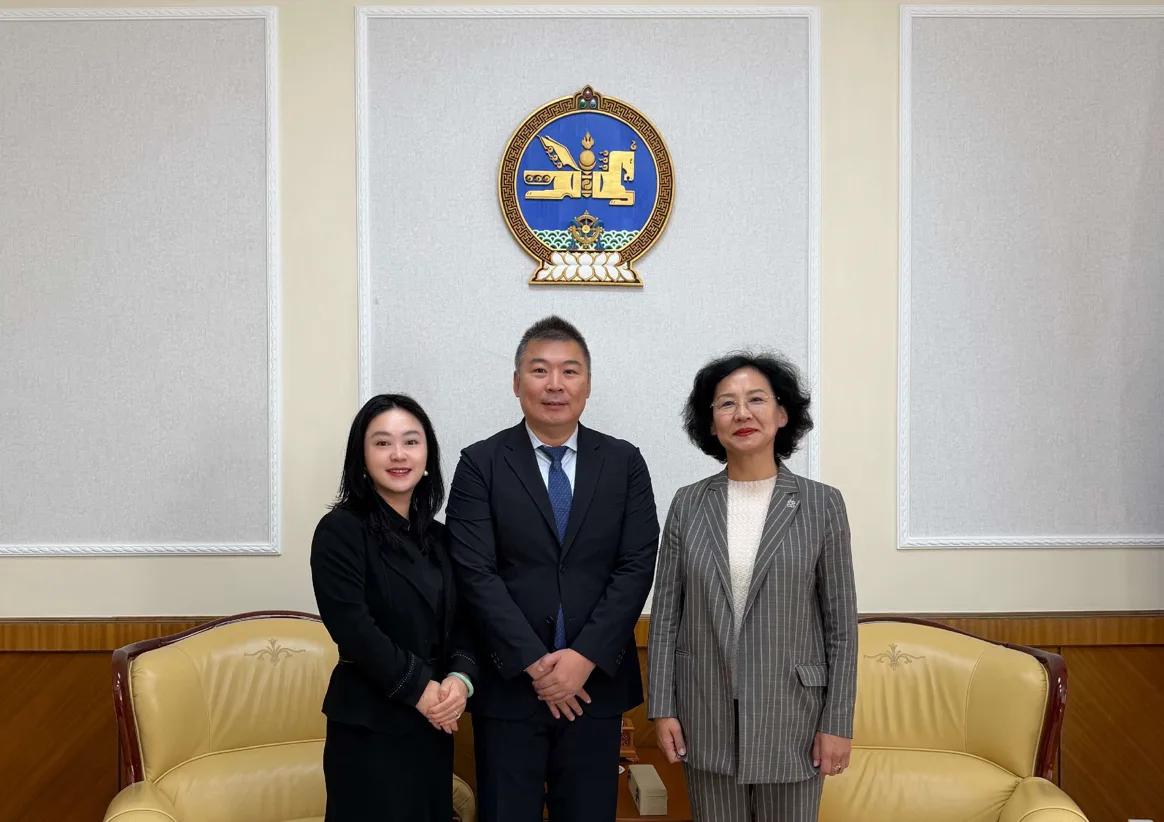
In the meeting with Member of Parliament Badarch Kherlen, the two sides focused on the possibility of establishing a China-Mongolia education and training friendly exchange mechanism. Discussions included international training programmes for Mongolian government officials, public sector managers, and policymakers, and exploring short-term training and exchange programmes in Cambridge, Oxford, and other locations in the UK. At the same time, the two sides also discussed China-Mongolia youth development, student exchange, cross-cultural learning, and long-term talent development mechanisms. Both sides agreed that educational exchange is an important foundation for enhancing mutual understanding between the two peoples, broadening young people's horizons, and cultivating internationalised talent.
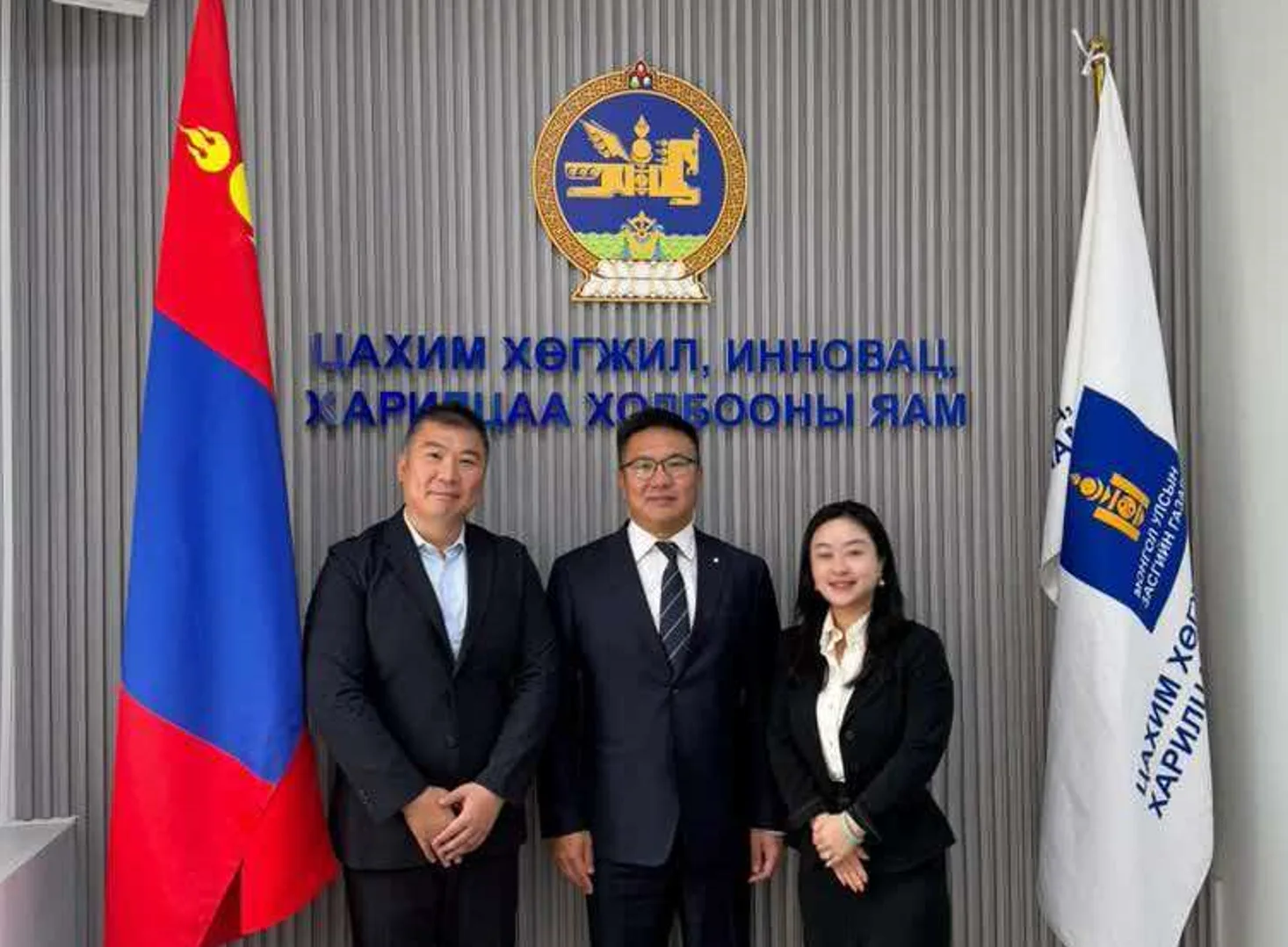
In the meeting with State Secretary Bavuujav Myagmarnaran, the two sides exchanged views on China-Mongolia digital development and talent capacity improvement. Topics covered digital transformation, AI applications, digital governance, digital education, and related professional training. The two sides explored customised learning programmes for government, educational institutions, and enterprise managers, as well as a cooperation model of gradually expanding professional talent coverage through a "train-the-trainer" approach. SPDI expressed its willingness to support Mongolia's digital talent development by drawing on China's relevant resources in digital development, AI applications, and continuing education.
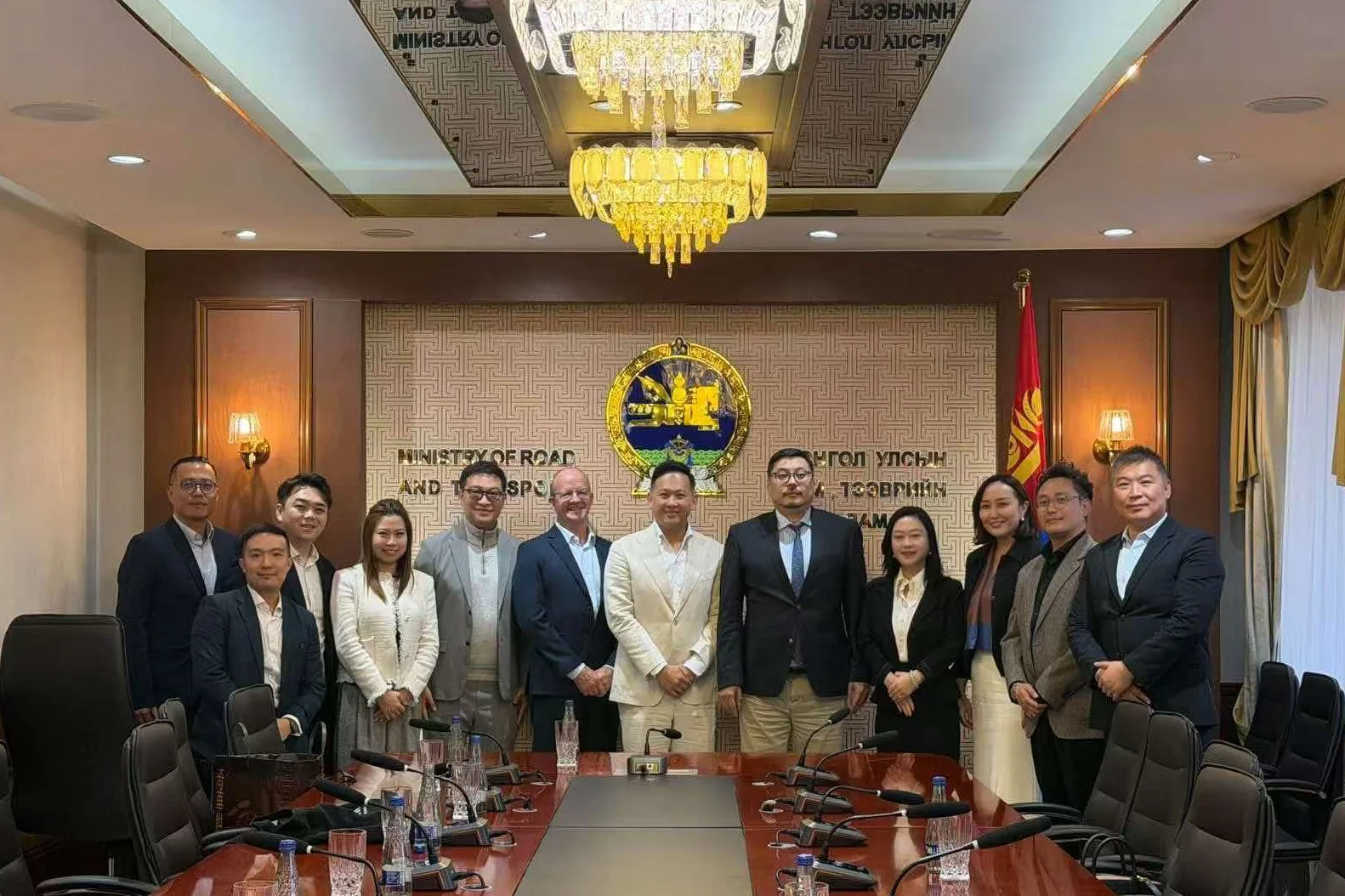
In the meeting with Director-General Bolor-Erdene Baasanjav, the two sides focused on the talent needs arising from Mongolia's transport infrastructure development. Mongolia is advancing transport, road, and related infrastructure construction, which has raised higher requirements for project management, engineering coordination, operations management, digital applications, and professional management talent. SPDI stated that it could draw on its long-term experience in western development, regional talent development, and grassroots capacity building, integrate Chinese and international educational resources, and explore training and exchange programmes for managers, professionals, and young talent in transport infrastructure, thereby providing talent support for Mongolia's transport development.
Both sides stated that they would maintain close communication, promote the establishment of a regular liaison mechanism, and quickly identify the first batch of implementable projects in areas such as educational exchange, digital capacity building, and transport infrastructure talent development. In the future, SPDI and Longcharm Education will continue to leverage their capabilities in international educational resource integration, project design, and learning services to promote more practical cooperation and contribute to China-Mongolia talent exchange and regional development.