

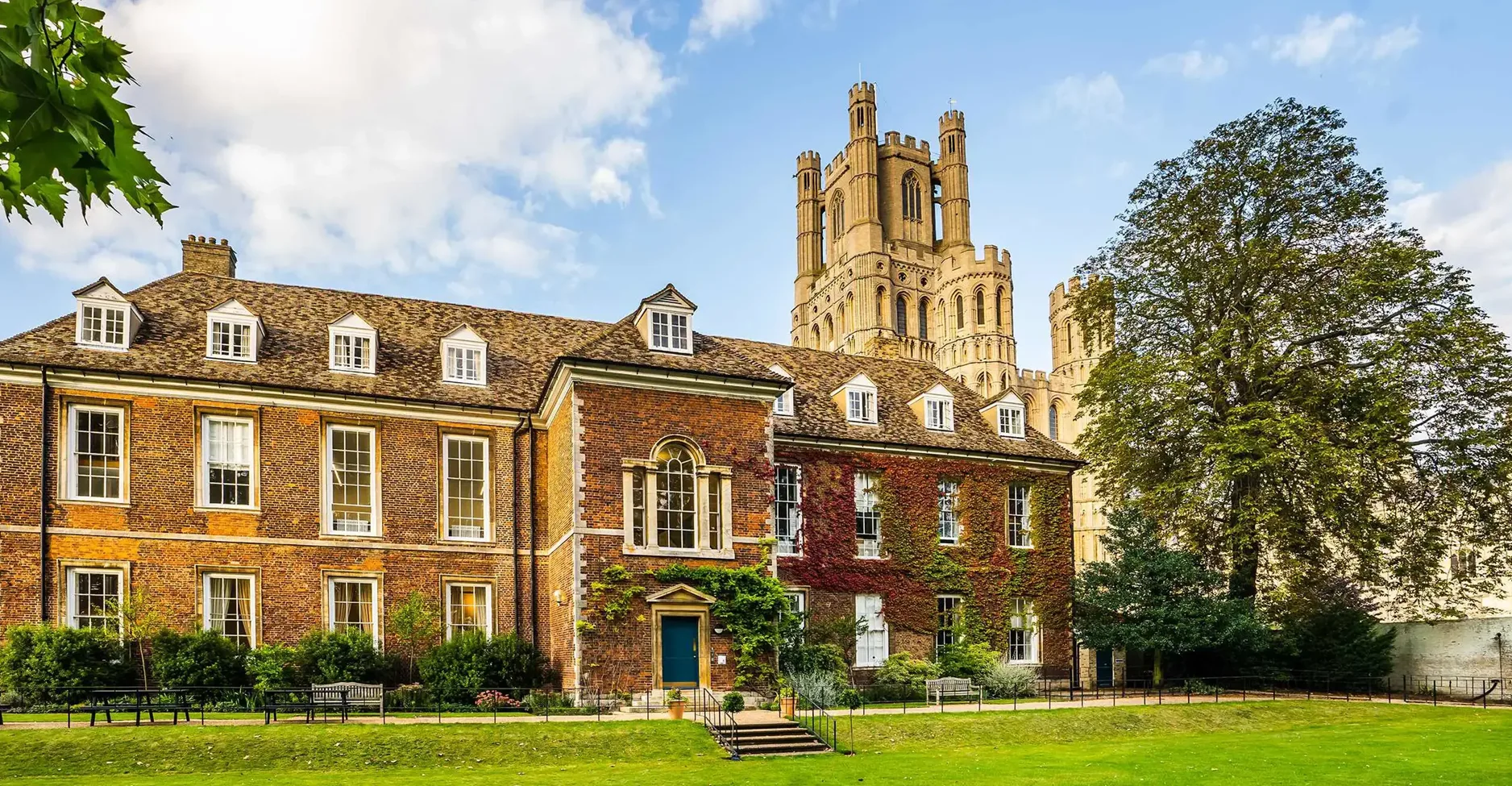
On October 15, Zhao Mengda, Executive Chairman of Shanghai Prospect Development Institute (hereinafter referred to as "SPDI"), Chairman of the China Culture Promotion Association Industrial Investment Association, and CEO of Longcharm Group, together with Dr. Wang Lina, Vice Chairperson and Executive Dean of SPDI and Co-founder of Longcharm Education, visited King's Ely in Ely, Cambridgeshire, UK.
The history of King's Ely can be traced back to 970 AD, making it one of the oldest schools in England with over a millennium of educational tradition. In 1541, King Henry VIII of England granted the school a Royal Charter, establishing its status as a "King's School"; in 1661, Charles II re-issued the Royal Charter. Its profound historical accumulation and royal connections give the school a distinctive character within the British educational tradition.
The school has a thousand-year historical connection with Ely Cathedral, and its origins are closely related to the local monastery and choral education. The history of Ely Cathedral can be traced back to 673 AD, with its current main structure dating from the 11th century and achieving cathedral status in 1109. The magnificent medieval architecture, the iconic octagonal tower, and the long-standing choral music tradition together constitute Ely's unique cultural landscape and provide the school with deep humanistic nourishment.
Today, King's Ely has developed into a co-educational school encompassing early years education through to sixth form (university preparation), offering both day and boarding systems. While continuing its historical and cultural traditions, the school combines academic education with music, art, drama, sports, and outdoor activities, providing a diverse learning and growth environment for students from the UK and other countries and regions.
This visit is part of SPDI's efforts to visit British educational institutions and expand international educational resources, providing on-site reference for understanding British school education, boarding culture, and historical and cultural heritage. SPDI will continue to explore cooperation opportunities in areas such as youth international exchange, cultural experience, and comprehensive quality cultivation, taking into account the educational needs of different regions in China and internationally.